
Rice bran oil, as one of the nutritious grain oils, is rich in nutrients and has attracted the attention of many consumers in recent years. In industrial production of rice bran oil, pressing and extraction are the two main oil production processes. These two processes differ significantly in the selection of rice bran oil processing equipment. The rice bran oil pressing process is a physical pressing method, relying on mechanical pressure to extract the oil, while the rice bran oil extraction method uses organic solvents to dissolve and extract the oil. These two different oil extraction methods determine the configuration of the entire rice bran oil production line, from raw material pretreatment to refined oil, as well as the investment scale. For companies looking to invest in a rice bran oil processing plant, choosing the right process route directly determines the equipment selection plan, investment budget, and product positioning, and is a crucial decision in the planning and construction of the rice bran oil plant production line.
The processing of rice bran oil can be mainly divided into three stages: rice bran pretreatment, rice bran oil solvent extraction, and crude rice bran oil refining. Below, Huatai briefly introduces the differences in equipment configuration between the pressing and extraction processes.
Common equipment for the rice bran oil pressing process mainly includes the following categories:
The pretreatment stage requires equipment such as cleaning screens, destoners, magnetic separators, softening pots, extrusion machine to fully condition the rice bran to achieve a physical state suitable for pressing. The core rice bran oil extraction equipment is the screw oil press, which generates high pressure in the pressing chamber through a screw shaft to squeeze the oil out of the rice bran. After pressing, filtration equipment (such as a plate and frame filter press) is needed for preliminary purification of the crude oil. The pressing method uses relatively simple equipment, but the processing capacity is relatively small, and the oil yield is also lower.
Common equipment for the rice bran oil extraction process mainly includes the following categories:
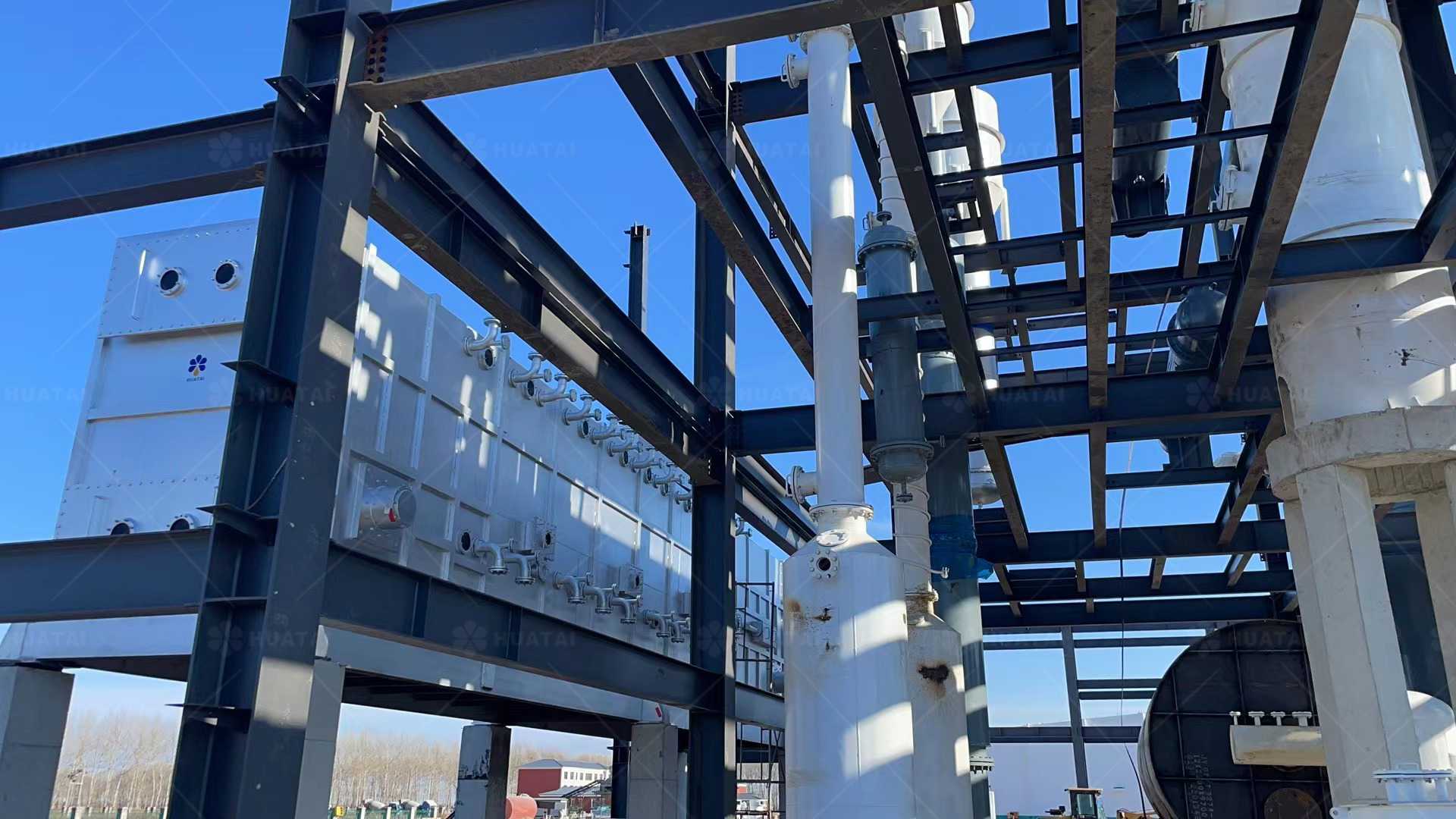
The pretreatment equipment is similar to that of the pressing method, but the softenting machine requirements are more stringent, requiring the rice bran to reach the appropriate moisture content and temperature for extraction. The core oil extraction equipment is the rice bran oil extractor. The rice bran is in countercurrent contact with the solvent in the rice bran oil extractor, and the oil dissolves into the solvent to form a mixed oil. The subsequent process requires a mixed oil evaporation system to recover the solvent, and a wet meal desolventizing system to process the rice bran meal after extraction. The solvent extraction method involves complex equipment and high investment, but it yields a high oil extraction rate and has a large processing capacity.
The key difference in equipment between the two processes lies in the core equipment: the pressing method primarily uses rice bran oil presses, while the solvent extraction method uses an extractor and an evaporation system. However, regardless of the processing method, the crude oil obtained needs to be refined to meet edible standards.
The crude oil produced by both processes requires refining to meet edible standards. The equipment configuration in the rice bran oil refining section is basically the same; both processes require standard equipment such as degumming tanks, deacidification tanks, decolorization towers, deodorization towers, filters, vacuum systems, and thermal oil furnaces. The differences mainly lie in equipment specifications, processing capacity, and process parameter settings.
The rice bran oil pressing and solvent extraction processes represent two completely different technological systems in terms of equipment selection. The rice bran oil pressing method uses simple equipment and requires less investment, making it suitable for small and medium-scale production or scenarios where oil flavor is a priority; the rice bran oil solvent extraction method involves complex equipment and high investment, but it offers a high oil extraction rate, large processing capacity, and lower overall cost, making it suitable for large-scale industrial production. When choosing a process route and equipment configuration, enterprises should consider multiple factors such as raw material supply scale, investment budget, and product positioning to make a sound decision.
Website: https://ricebranoilpress.com/
Email: info06@cnoilmachine.com