
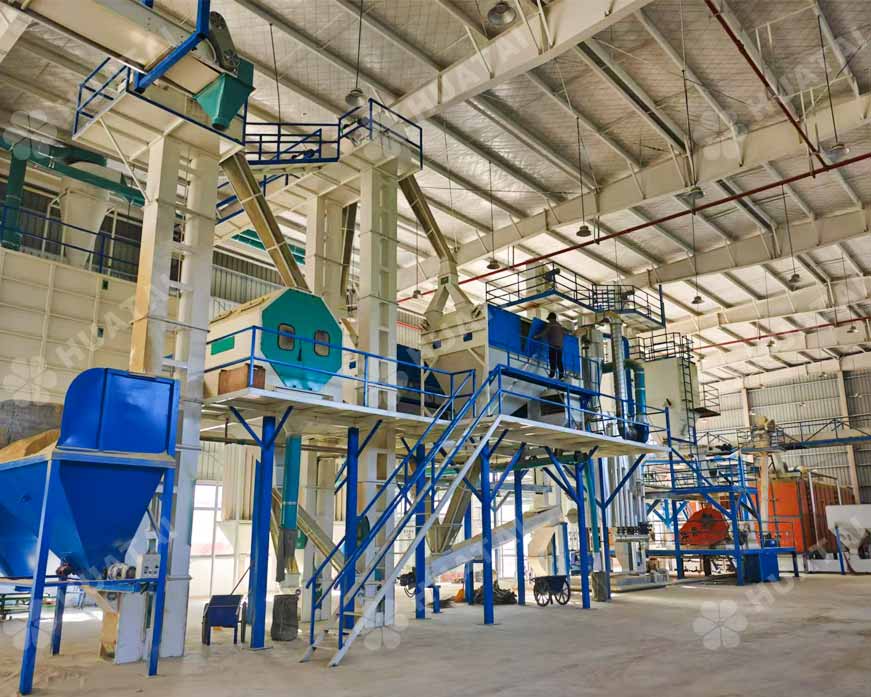
Rice bran oil and rice germ oil differ significantly in their production processes, primarily in raw material processing, extraction techniques, and refining levels. The following is a detailed comparative analysis:
-
Rice Bran Oil
1) Raw Materials
Source: Rice bran is a byproduct of rice processing, consisting of the outer layers of brown rice (peel, seed coat, aleurone layer) and a small amount of germ.
Characteristics: Rice bran contains oil (approximately 15-20%), but it is highly susceptible to rancidity (due to high lipase activity), requiring rapid processing.
2) Rice Bran Oil Production Process
a. Rice Bran Pretreatment (Key Step)
Fresh rice bran needs to be immediately heated or extruded to inactivate lipase and prevent an increase in free fatty acids.
Methods: Steam treatment, extrusion puffing.
b. Rice Bran Oil Extraction Process
Main Method: Solvent extraction (commonly using n-hexane), as rice bran has a low oil content and high extraction efficiency.
Auxiliary methods: Partially physical pressing (screw pressing) is used, but the oil yield is low.
c. Rice Bran Oil Refining Process (Essential and Complex)
Rice bran oil contains many impurities (wax, free fatty acids, pigments, etc.), requiring deep refining:
Dewaxing: Low-temperature crystallization filtration removes high-melting-point waxes (to prevent oil turbidity).
Deacidification: Alkali refining neutralizes free fatty acids.
Decolorization: Using bleaching clay to adsorb pigments (rice bran oil is naturally darker).
Deodorization: High-temperature vacuum distillation removes off-odors.
Retained Components: Modern rice bran oil refining processes retain nutrients such as oryzanol and vitamin E.
3) Characteristics
Complex Rice Bran Oil Processing Process: High refining requirements, especially dewaxing and deacidification.
Nutritional Retention: A balance must be struck between the degree of refining and the retention of active ingredients (such as oryzanol).
Industrial Production: Commonly found in large-scale rice bran oil processing plants.
-
Rice Germ Oil
1) Raw Materials
Source: Strictly derived from the germ of rice (approximately 2-3% of the rice grain’s weight).
Characteristics: Germ is nutrient-dense, with a high oil content (approximately 25-30%), and its oil stability is superior to rice bran, but separation is difficult.
2) Rice Germ Oil Production Process
A. Rice Germ Separation (Key Challenge)
The germ must be precisely separated during the rice milling process using gravity sieving or air separation.
Requirements: High-purity germ (avoiding contamination with rice bran that could affect flavor).
B. Rice Germ Oil Extraction Process
Main Method: Primarily physical cold pressing (low-temperature pressing) to retain heat-sensitive nutrients (such as Vitamin E and oryzanol).
Auxiliary Method: Supercritical CO₂ extraction (used in high-end products) to avoid solvent residue.
C. Rice Germ Oil Refining Process (Relatively Simplified)
Rice germ oil has fewer impurities (low wax content) and a lower degree of refining:
Light filtration: Removes solid residue.
Low-temperature deacidification/decolorization: A gentle process is used when necessary.
Emphasis on preserving original flavor: Most products aim for minimal processing to retain the natural rice aroma.
3) Characteristics
Raw material scarcity: High cost of germ separation, resulting in low oil yield.
Gentle processing: Cold pressing is the core technology, avoiding high-temperature damage to nutrients.
High-end positioning: Commonly found in the small-batch, high-value-added health food market.
3. Comparison of Key Differences between Rice Bran Oil and Rice Germ Oil
| Item: | Rice Bran Oil | Rice Germ Oil |
| Raw Materials: | Rice bran (including outer layers) | Pure rice germ |
| Extraction Focus: | Rapid stabilization and pretreatment, efficient extraction | Precise separation of rice germ, low-temperature pressing |
| Refining Level: | Deep refining (dewaxing and deacidification are necessary) | Light refining (retaining natural components) |
| Nutritional Emphasis: | Retaining oryzanol and phytosterols | Enriched with vitamin E and antioxidants |
| Production Scale: | Large-scale industrialization | Small-batch, high-end production |
| Product Positioning: | Mass-market cooking oil (high smoke point) | High-end health oil/dietary supplement |
Summary
Rice bran oil: The core process of rice bran oil machine is efficient, stable, and deep refining, solving the problem of rice bran’s easy rancidity, balancing nutrition and practicality, suitable for daily cooking.
Rice germ oil: The core process is raw material purification and gentle extraction, highlighting the nutritional scarcity of the rice germ, maximizing the retention of active ingredients through cold pressing technology, positioned as a high-end health food.
The differences in process process between rice bran oil and rice germ oil is essentially determined by the characteristics of the raw materials and the product positioning: Rice bran oil pursues industrial efficiency and stability, while rice germ oil focuses on raw material purity and nutritional preservation.
Website: https://ricebranoilpress.com/
Email: info06@cnoilmachine.com